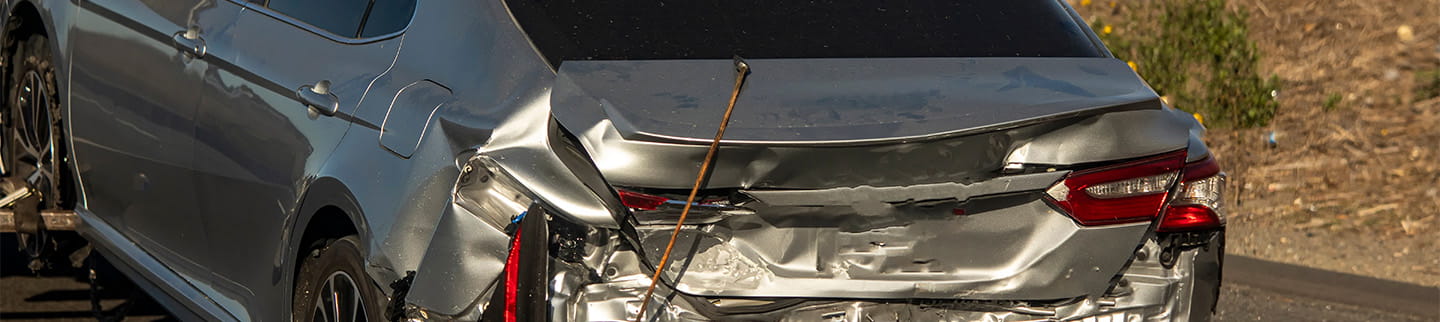

When a client walks through your door after being rear-ended by a semi truck, delivery van, or other commercial vehicle, one of the first questions on their mind is straightforward: how much compensation can they expect? The honest answer requires context. Rear-ended by commercial vehicle settlement values in the United States often range from low six figures to well into seven figures when serious injuries are involved, but no single average settlement captures every case.
National data suggests the median jury verdict for rear-end truck accident cases hovers around $93,000 to $100,000, with roughly 12 percent of verdicts exceeding $1 million when catastrophic outcomes are proven. Yet settlements, which remain largely confidential, frequently exceed these verdict benchmarks as defendants seek to avoid trial exposure. For personal injury lawyers evaluating these files, understanding what drives settlement value is essential to signing the right cases, setting realistic client expectations, and positioning each matter for maximum compensation.
This article is written specifically for U.S. personal injury attorneys who handle—or want to handle—truck accident cases and commercial vehicle accidents. Understanding how to value rear end collision cases accurately improves client outcomes while helping your law firm decide which leads to pursue, how much to invest in litigation, and when to partner with a legal lead generation provider like Walker Advertising to scale your caseload.
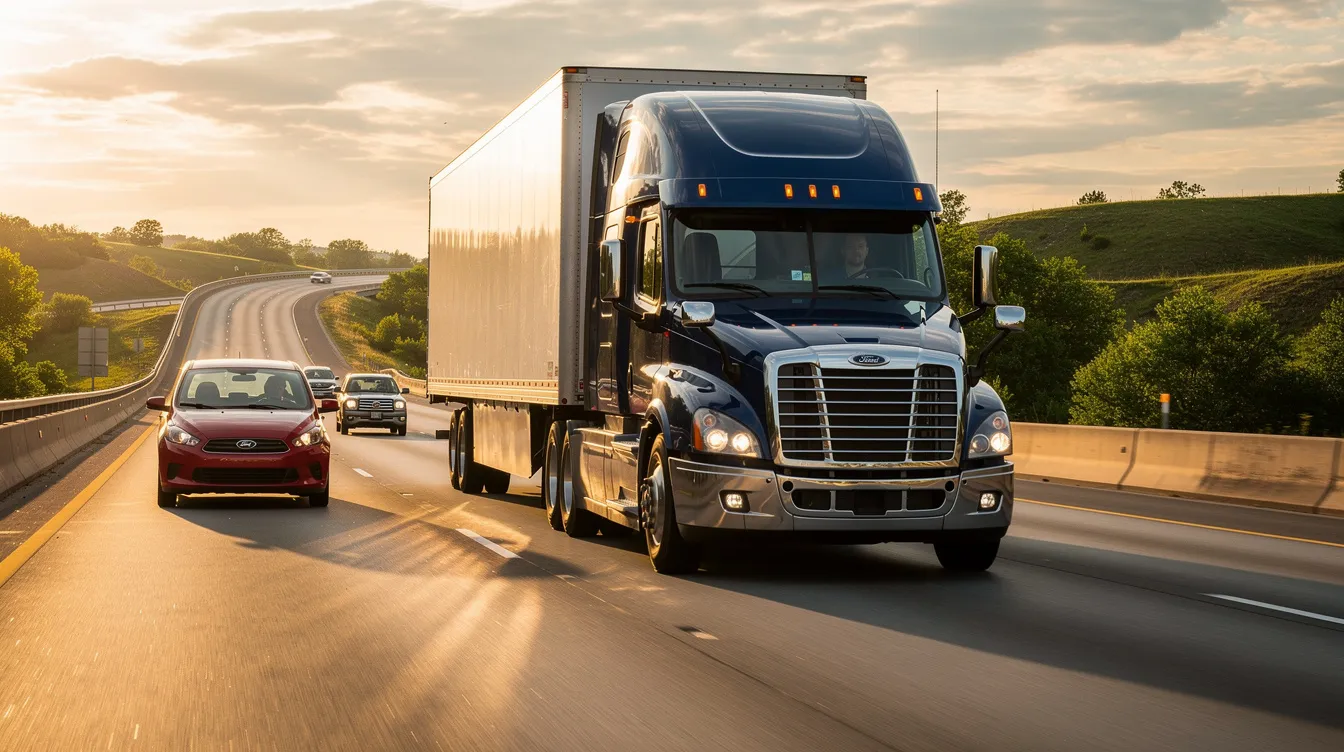
Typical Settlement Ranges in Rear-End Commercial Vehicle Cases
Commercial vehicle accident settlements are driven by case-specific facts, but experienced attorneys benefit from realistic working ranges for evaluation and client management. While no formula applies universally, the following benchmarks provide useful context for rear-end truck cases:
- Soft-tissue or short-term treatment cases often resolve between $25,000 and $150,000, depending on jurisdiction, documentation quality, and available policy limits.
- Moderate injuries—such as herniated discs requiring epidural injections or non-surgical fractures—typically fall in the $150,000 to $500,000 range when liability is clear and medical records are well-documented.
- Catastrophic injury or wrongful death claims frequently resolve in the high six figures to multi-millions, especially where evidence reveals egregious safety violations, falsified driver logs, or hours-of-service breaches.
National verdict studies confirm that plaintiffs succeed in recovering damages in about 63 percent of rear-end truck cases that reach trial. The median verdict of approximately $93,909 provides context, but truck accident settlements are typically confidential and often exceed verdict medians as insurance companies seek to avoid unpredictable jury outcomes.
Venue matters significantly. A 2024 or 2025 rear-end truck accident case in plaintiff-friendly jurisdictions like Los Angeles County, the Bronx, Cook County, or Harris County may command substantially higher settlement value than an identical file in a conservative rural venue. Attorneys should also note that federal minimum insurance coverage for interstate carriers starts at $750,000, with many commercial policies layered at $1 million, $2 million, or higher. When liability is strong, these limits mean commercial semi truck cases can far exceed standard car accident cases in resolution potential.
Key Liability and Fault Issues in Rear-End Commercial Vehicle Crashes
While the rear vehicle is often presumed at fault in a rear-end collision, commercial truck accidents demand a much deeper liability analysis than standard car accident cases. Experienced truck accident attorneys evaluate multiple layers of responsibility before setting case strategy.
Most state laws establish rebuttable presumptions of negligence when a following vehicle strikes the lead car—typically through following-too-closely statutes. However, these presumptions are just the starting point. In commercial vehicle cases, attorneys investigate:
- Driver logs and electronic logging device (ELD) data to confirm hours-of-service compliance, uncover fatigue violations, or identify falsified entries
- Event data recorders (black boxes) that capture pre-crash speed, braking inputs, and acceleration patterns
- Company-level negligence in dispatch practices, training protocols, and pressure to meet unrealistic delivery windows
Plaintiffs’ lawyers also pursue additional theories that can significantly increase settlement potential:
- Negligent hiring, training, supervision, or retention—such as a trucking company that retained a truck driver with a prior DUI or multiple rear-end accidents
- Negligent maintenance claims based on worn brakes documented in pre-trip inspection reports or violations under 49 C.F.R. Part 396
Identifying multiple liable parties—the motor carrier, vehicle owner, freight broker, shipper, or maintenance contractor—can unlock additional insurance towers. A 2023 hypothetical illustrates the leverage: ELD data exposed a driver’s hours-of-service breaches and falsified logs, transforming a disputed liability file into a seven-figure settlement driven by punitive damages exposure in a jury-conscious venue.
Injury Profiles and Medical Evidence That Drive Settlement Value
The physics of a large commercial truck—often weighing 80,000 pounds—striking a 3,000-pound passenger vehicle generates forces far beyond typical car accident cases. This amplifies both injury severity and long-term impact, directly affecting how attorneys value rear-end commercial truck accidents.
Common injury patterns in these collisions include:
- Cervical and lumbar disc herniations, often with radiculopathy requiring injections or fusion surgery
- Mild traumatic brain injuries from acceleration-deceleration forces, sometimes presenting with normal initial imaging but persistent cognitive symptoms
- Shoulder and knee injuries from seatbelt loading and intrusion, with surgical versus non-surgical treatment paths creating vastly different settlement brackets
- Spinal cord injuries, amputations, crush injuries, and wrongful death in high-speed or underride scenarios
Medical evidence quality is decisive. Objective findings—MRIs confirming herniations, EMGs documenting nerve impingement, CT scans revealing fractures—move adjusters from soft-tissue valuations into higher territory. Equally important is treatment chronology: documenting consistent complaints from the ER visit through physical therapy blocks defense arguments about gaps in medical treatment.
Attorneys quantify damages using:
- Past medical bills, including 2025 hospital and surgical costs for spinal procedures that often exceed $100,000 to $200,000
- Future medical expenses projected by life care planners when clients face ongoing therapy, injections, or hardware removal over decades
A rear-end collision with a dump truck or delivery vehicle can justify dramatically different settlement evaluations depending on whether the client’s treatment arc shows minor whiplash or permanent spinal impairment requiring surgery.

Economic and Non-Economic Damages: How Plaintiff Lawyers Value the Case
Truck accident case valuation requires a disciplined damages framework rather than generic multipliers. Experienced personal injury lawyers build their calculations from documented losses.
Economic damages form the foundation:
- Past medical bills, adjusted for write-offs and lien considerations
- Future medical expenses supported by treating physician opinions or life care planners
- Past lost wages documented through payroll records, 1099s, and tax returns
- Loss of future earning capacity calculated by vocational experts and economists—for example, a 35-year-old construction worker with permanent lifting restrictions after a 2024 rear-end truck crash facing projected lost income exceeding $1 million
Non-economic damages require different approaches:
- Pain and suffering, emotional distress, loss of enjoyment of life, and loss of consortium
- Jurisdictional caps in some states constrain non-economic recovery, while plaintiff-friendly venues allow substantial jury awards
- Per diem arguments, life-impact narratives, and day-in-the-life videos strengthen mediation demands
Practical attorneys anchor demands by comparing to historical verdicts in the same county for similar injuries and liability patterns. While some practitioners reference multipliers (2–5× medical specials) as starting points, serious commercial vehicle cases benefit from custom, evidence-based modeling that captures the full scope of property damage, medical costs, lost wages, and life disruption.
Venue, Insurance Limits, and Litigation Posture
Two rear-end commercial vehicle cases with identical injuries can resolve very differently based on venue, applicable law, and litigation posture.
Venue considerations:
- Jury demographics and verdict histories in places like Los Angeles County, the Bronx, Cook County, Harris County, or Fulton County influence how defense counsel values risk
- State-specific comparative fault rules matter—pure comparative fault states allow recovery even when the plaintiff shares blame, while modified rules may bar recovery if plaintiff fault exceeds 50-51 percent
Insurance coverage and assets:
- Federal minimum liability insurance for interstate carriers starts at $750,000 for general freight, with higher requirements for hazardous materials or passenger transport
- Commonly encountered policies include $1 million primary coverage plus excess layers that can unlock seven- and eight-figure resolution potential
- Self-insured fleets (large retailers, logistics companies) may hold high deductibles but often settle aggressively to protect corporate assets and avoid reputational exposure
Litigation posture:
- Willingness to file early, pursue motion practice, and develop punitive liability themes materially moves settlement numbers
- Mediation after critical discovery—depositions of safety directors, 30(b)(6) representatives, and treating physicians—often produces resolution in high-value truck accident claims
Consider two hypothetical scenarios: a rear-end truck accident with L4-L5 fusion in a conservative rural venue might settle under $500,000, while the same injuries in a plaintiff-friendly urban jurisdiction could yield $1.25 million or more, as illustrated by a Brooklyn box truck case that resolved at mediation after summary judgment on liability.
Evidence Strategy: What Strong Files Have in Common
Rear-end commercial vehicle cases are won or lost on meticulous evidence development, even when liability seems obvious. Strong truck accident settlements share common evidentiary foundations.
Scene and vehicle evidence:
- High-resolution photos from the accident scene captured immediately
- ECM/EDR downloads from both vehicles documenting speed, braking, and pre-impact data
- Accident reconstruction experts when speed or lane-change disputes exist
- Police reports, 911 audio, and CAD records corroborating initial accounts
FMCSA compliance records:
- Hours-of-service logs and ELD data from the FMCSA portal
- Dispatch records and Qualcomm/text communications revealing scheduling pressures
- Driver qualification files exposing prior violations, failed drug tests, or distracted driving incidents
- Maintenance documentation including pre-trip inspection reports and brake service records showing 49 C.F.R. Part 396 compliance or violations
Preservation priorities:
- Secure video from nearby businesses, dash cams, and onboard telematics within days—data is often overwritten within 30 days
- Obtain traffic camera footage when available through public records requests
Medical and damages documentation:
- Comprehensive medical records with clear causation opinions linking injuries to the rear-end impact
- Employment records and expert economic reports connecting the collision to wage loss and diminished future earning capacity
An experienced attorney treats evidence development as a checklist—missing a single item can undermine settlement leverage against sophisticated defense counsel and insurance companies.
Client Intake and Case Screening for Rear-End Commercial Vehicle Leads
For growing personal injury law firms, quickly triaging rear-ended by truck leads is critical to signing strong semi truck accident case files and avoiding time sinks, especially when you’re scaling intake around high-intent motor vehicle accident leads.
Essential first-contact questions:
- Exact vehicle types involved: 18-wheeler, box truck, Amazon delivery van, tractor trailer, municipal garbage truck, or commercial semi truck
- Date and location of the crash to identify statute of limitations issues and venue value impacts
Injury documentation at intake:
- Whether the client was transported from the accident scene to an ER or urgent care, and which facility
- Current diagnoses (herniated disc, concussion, fracture), imaging performed, and whether surgery has been recommended
- Ongoing medical treatment status and whether the client is following their treatment plan
Liability red flags to capture:
- Defense allegations that the plaintiff “slammed on brakes” or was partially at fault
- Prior accidents or pre-existing conditions requiring careful handling but not automatically killing value when properly differentiated
Robust intake scripts and trained bilingual staff (English/Spanish) dramatically improve conversion rates and data quality, especially for working-class clients involved in delivery-related collisions and other auto accident lead types. Firms that capture accurate information at first contact—vehicle type, injuries, treatment status—can quickly identify high-value personal injury cases and allocate resources accordingly.
Offering a free case evaluation or free consultation as part of your intake process can also help convert hesitant callers into signed clients.
Marketing Perspective: Why Rear-End Commercial Vehicle Cases are Growth Drivers
From a business-development standpoint, rear-end truck accident cases and delivery vehicle collisions offer strong ROI for personal injury law firms because they often present clearer liability than intersection crashes, carry higher policy limits than typical passenger car claims, and involve injuries serious enough to justify contingency-fee investment—exactly the kind of commercial legal leads that offer a better ROI than standard auto cases.
Many firms now specifically target:
- Semi-truck rear-end collisions on interstates and major highways
- Delivery van crashes involving recognizable brands (Amazon, UPS, FedEx)
- Local commercial fleets—plumbing vans, construction trucks, regional carriers—with robust insurance programs
Building a steady pipeline requires thoughtful positioning and creative campaigns that mirror the best-performing lawyer advertising examples in your market.
- Focused digital marketing around “rear-ended by a commercial vehicle” and related search intent
- Culturally competent and bilingual outreach to communities heavily impacted by commercial traffic and delivery logistics
- Understanding valuation levers (liability, injuries, venue, damages) to price case portfolios and decide which marketing channels to scale
Firms that master the legal process for truck accident claims—from intake through resolution—position themselves to recover financial compensation consistently while growing sustainable caseloads.
How Partnering With Walker Advertising Helps You Capture and Convert High-Value Truck Leads
Walker Advertising is a long-established legal marketing and lead generation partner behind trusted brands like Los Defensores and 1-800-THE-LAW2. We focus on connecting personal injury firms with qualified clients involved in serious vehicle accidents, including rear-end commercial vehicle crashes, as part of a broader portfolio of personal injury lead generation services.
How Walker Advertising supports PI firms seeking truck case growth:
- Running compliant, bilingual TV, radio, digital, and out-of-home campaigns that resonate with injured drivers and passengers—including those rear-ended by commercial trucks or delivery vehicles
- Operating an in-house, bilingual contact center that screens callers 24/7 for key facts (vehicle type, date, injuries, treatment status) before delivering leads to law firm partners
Lead quality advantages:
- Pre-qualified leads where basic liability and injury information is already gathered, reducing wasted intake time
- Access to Spanish-speaking callers who might otherwise never contact a personal injury attorney through English-only advertising channels
Operational benefits for your law firm:
- Scale your rear-end commercial vehicle and truck caseload without building a large internal marketing team by leveraging subscription-based or pay-per-lead legal marketing
- More predictable case volume to justify investments in experts, litigation staffing, and specialized truck-crash processes
- Free case review of lead quality and fit with your practice areas, plus guidance on purchasing personal injury leads as part of a balanced marketing mix
Walker Advertising structures campaigns to align with state bar advertising rules and industry regulations, reducing compliance risk for small and mid-sized firms that lack in-house marketing resources.
Personal injury lawyers ready to capture more rear-ended by commercial vehicle cases and grow their truck accident practice should explore a partnership with Walker Advertising. Contact us to discuss how pre-qualified, bilingual leads can fit into your growth strategy and help your firm achieve fair settlement results for more clients.